Last updated
A wasp nest can go from a nuisance to a real hazard quickly, especially for anyone with an allergy. Treating a nest yourself is risky, disturbed wasps become aggressive. We treat active nests quickly and safely with professional products and equipment, then remove or make the nest safe.
Have you ever tried to enjoy a quiet cup of tea in the garden, only to be chased indoors by an angry wasp? A professional wasp nest removal is often the only way to safely reclaim your outdoor space.
We see this frustration all the time across South West London. A nest that was just a tiny golf ball in June can quickly explode into a colony of 5,000 to 10,000 workers by August.
As one of the most seasonal parts of our pest control across Surbiton, our team treats and removes these nests across Surbiton and the surrounding areas safely and with the right kit. There are no messy ladder and fly spray attempts, no unnecessary damage to your loft, and no lingering danger for anyone with an allergy.
You will discover exactly why these nests appear and how to sort them out today.
Why Wasp Nest Removal DIY goes so badly wrong
Almost every serious wasp incident involves someone trying to deal with the nest themselves. We know exactly how tempting it is to grab a cheap spray from the supermarket. The classic pattern usually involves a wobbly ladder and a nest hidden under the eaves.
The moment the spray hits, the colony pours out. Our experience shows that the person on the ladder is suddenly surrounded by hundreds of angry wasps, several feet up, and unable to get down safely. The Local Government Association notes that insect bites and stings contribute to the 3.7 million annual A&E admissions for minor conditions in the UK. Adding a fall from a ladder to a severe allergic reaction turns a simple pest problem into a genuine medical emergency.
The Professional Difference
We use highly targeted methods that actually eliminate the entire colony. Professional wasp control changed significantly in the UK recently. The old standard dust, Ficam D, was banned in early 2025 due to new safety regulations.
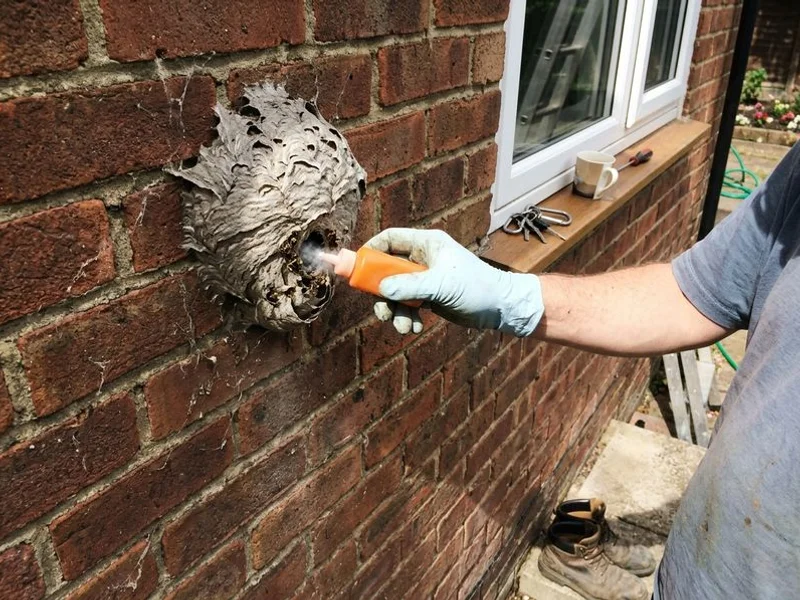
Our technicians now use modern, highly effective alternatives like Vulcan P5, a professional grade permethrin dust. This powder works completely differently to a standard aerosol spray.
- Insecticidal dust, not spray: Returning wasps carry the permethrin dust back deep into the nest. This kills the whole colony from the inside out, whereas a spray only kills the few workers you can see.
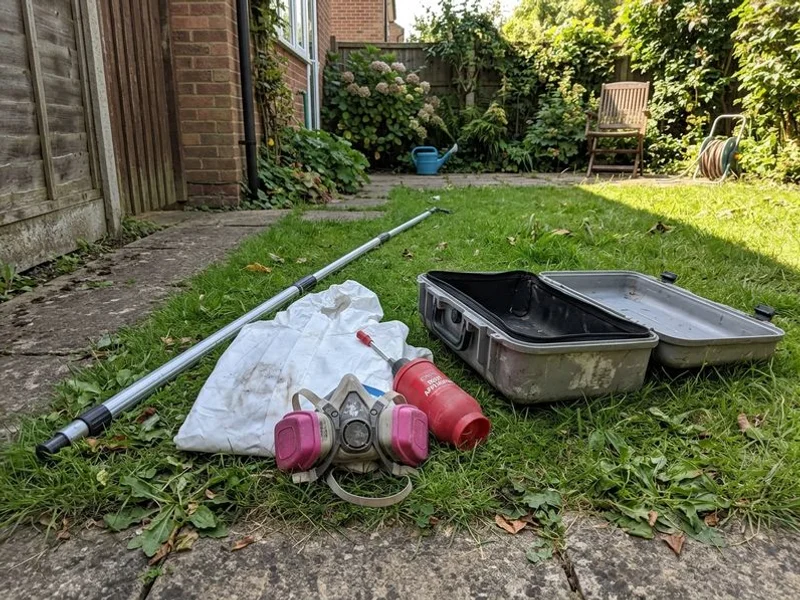
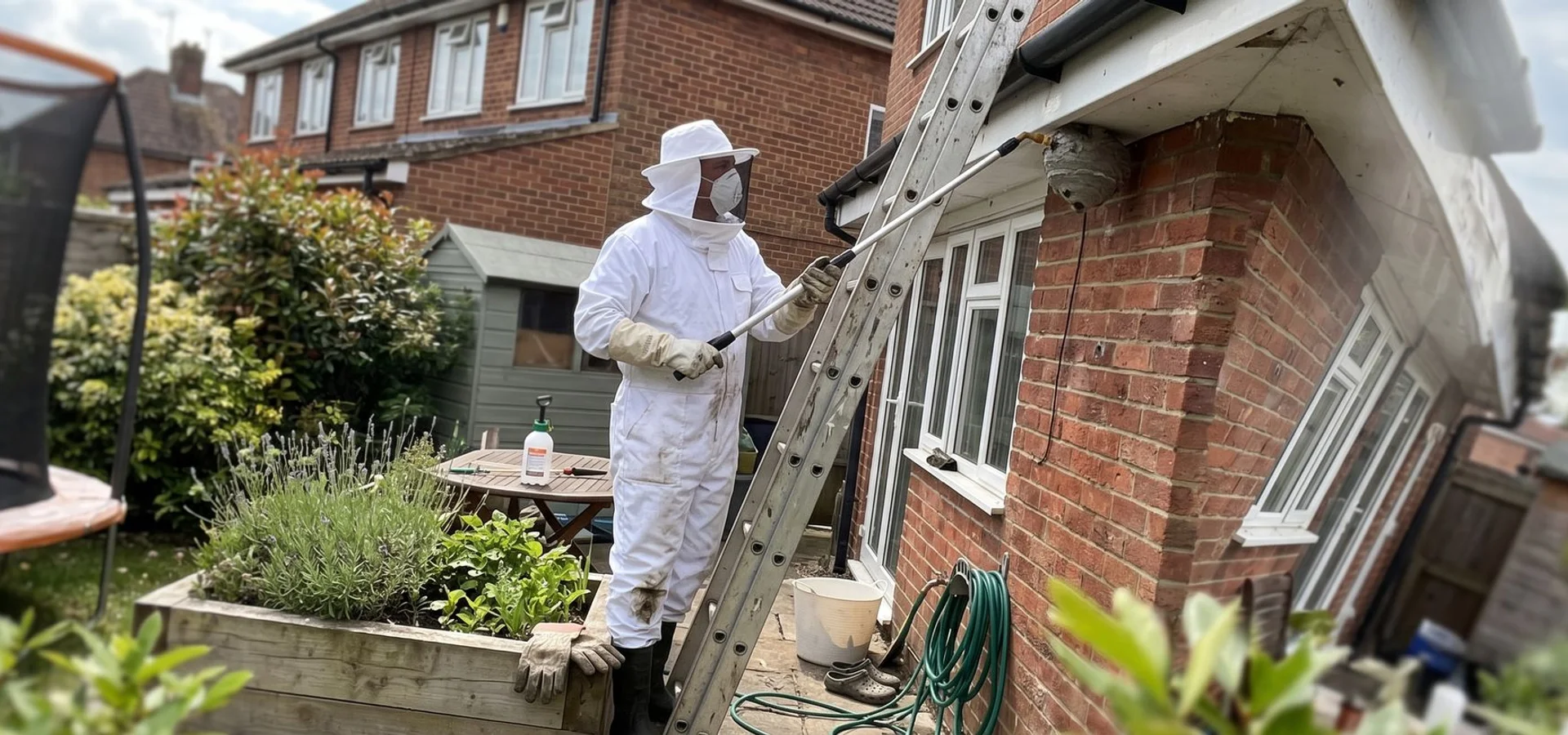
- Full PPE and correct length extension pole: We treat the problem from a safe distance using carbon fibre poles that reach up to 8 metres. You will never see us standing right next to a dangerous entry point.
- Experience with the species: Common wasps (Vespula vulgaris) and German wasps (Vespula germanica) behave differently. Knowing exactly which species you are dealing with matters for a successful treatment.
| Feature | Shop Bought Aerosol Spray | Professional Permethrin Dust |
|---|---|---|
| Kill Method | Only kills visible workers on contact | Carried into the nest to destroy the colony |
| Application Reach | Usually 1 to 2 metres maximum | Applied precisely from up to 8 metres away |
| Safety Risk | High risk of agitation and stinging | Low risk due to safe distance and protective gear |
Where wasp nests are usually found in Surbiton
We find that local architecture plays a massive role in where these insects decide to settle. Surbiton is famous for its beautiful Victorian and Edwardian semi detached homes, along with plenty of 1930s properties. These classic buildings feature lots of London stock brick and ornate timber detailing, which wasps absolutely love.
Our technicians regularly spot nests tucked behind old timber sash windows or exploiting tiny gaps in traditional brickwork. The queens are simply looking for a sheltered, warm, and undisturbed space to build their paper kingdoms.
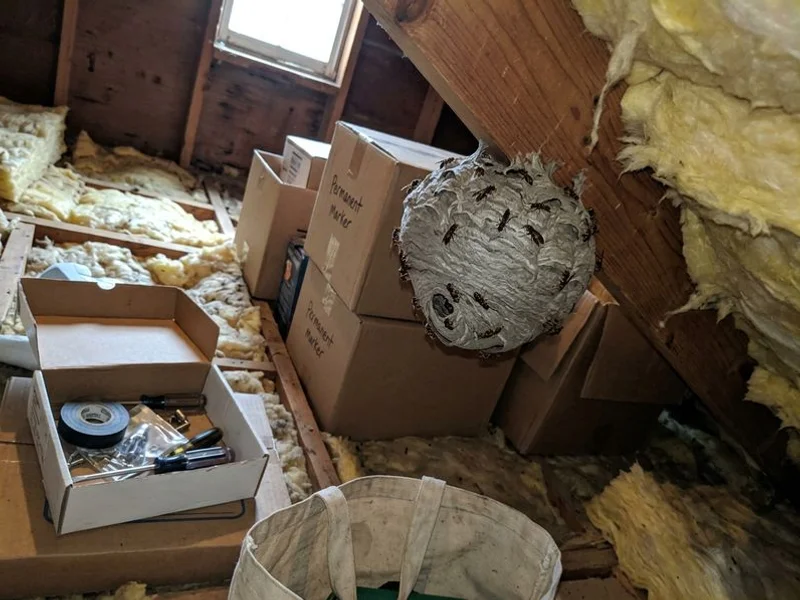
- Loft voids and roof eaves: These are incredibly common in 1930s semis, offering a warm and dry environment.
- Cavity walls: Wasps often find a very small entry point near a damaged vent or an old cable hole in Victorian brickwork.
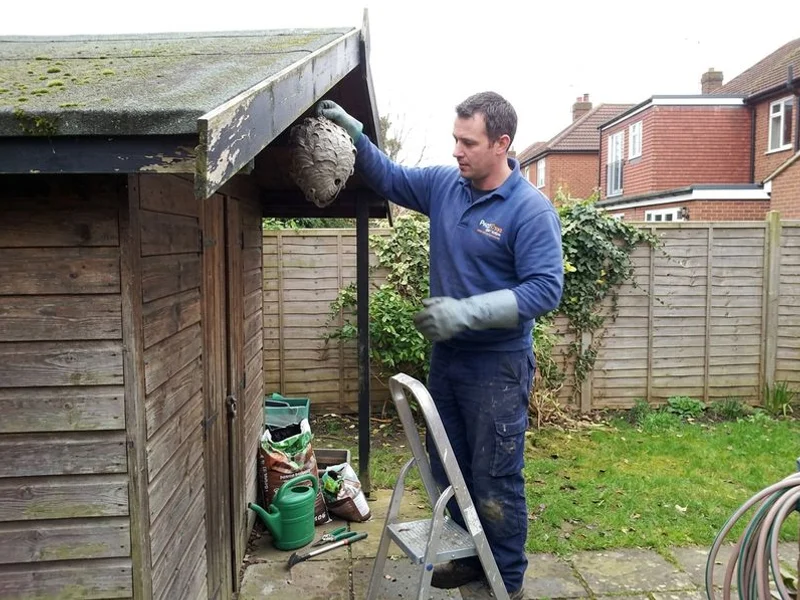
- Garden sheds and outbuildings: Older timber sheds with slight gaps in the felt roof are prime real estate.
- Wall cavities behind hanging baskets or bird boxes: This is oddly common in well kept suburban gardens.
- Hedges, bushes and bank holes: The classic aerial or ground nest is often favoured by the German wasp.
We have dealt with every single one of these locations before. A professional treatment usually takes inside 20 minutes. You can simply stay safely indoors while the problem is resolved.
Wasp season, and why short notice matters
We always advise our customers to pay close attention to the changing seasons. According to the British Pest Control Association (BPCA), the UK wasp season runs from about April through to October. Queens emerge from hibernation in the spring and immediately start founding new nests.
Our busiest time of year hits during the peak nuisance period from late July through September. By late summer, the colony is at its absolute largest.
The Late Summer Sugar Rush
We see a huge shift in wasp behaviour as August approaches. The larvae inside the nest stop producing a sugary spit that the adult workers rely on for food. This sudden lack of food makes the workers desperate, bold, and highly aggressive.
Our emergency calls spike when these hungry insects start hunting for sugar in your garden. They often gorge on fermenting fallen apples, getting slightly drunk and far more likely to sting.
If you have seen a steady stream of wasps flying to and from the same spot, especially eaves, a roof edge, a cavity vent or a shed, that is an active nest.
We understand that waiting two weeks for an appointment is not an option when your garden is swarming. Fast action prevents a small nuisance from becoming a serious hazard. Call us as soon as you spot that steady flight path, and we will handle the wasp nest removal on the same day wherever possible.